Marbella guide · Playa Marbella
Playa Marbella
Where the road ends and the beach begins.
Character
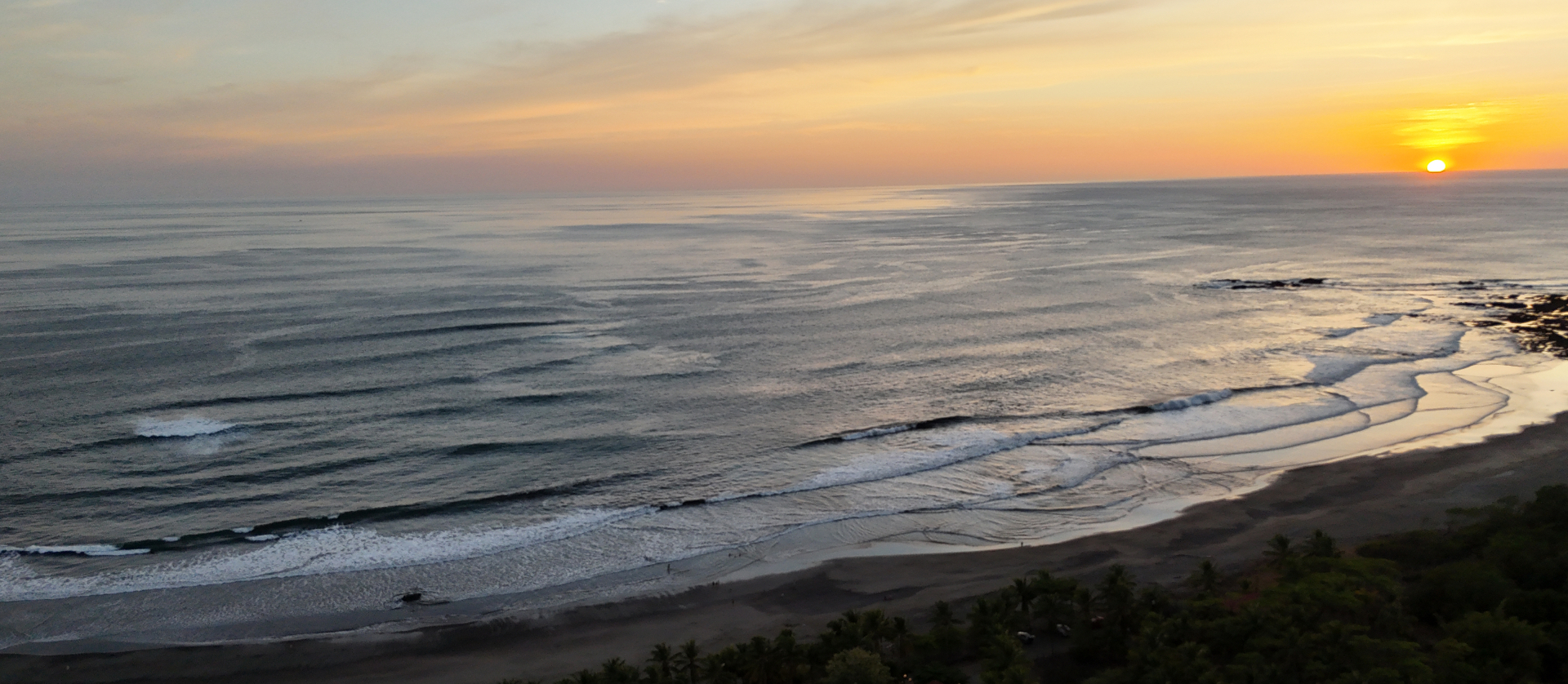
Playa Marbella is a long, quiet stretch of Pacific coastline on the northern Nicoya Peninsula, dark volcanic-gray sand meeting consistent, powerful surf. The beach unfolds as two connected sections locals refer to separately: Playa Coco to the north, where the break is punchier and more powerful, and Playa Frijolar to the south, a mellower, longer point break that's more forgiving for less experienced surfers. Together, they're what most people simply call Playa Marbella.
There are no buildings directly on the sand. A dirt road runs behind the beach instead, stretching the length of it before ending at the Tiki Hut, a small restaurant tucked at the far end. Between that road and the sand itself runs a loose row of palm trees and green space, and this is where the beach really comes alive: surfers and visitors park along the trees, set up chairs or hammocks in the shade, and spend the day with an unobstructed view of the Pacific just steps away. It's a simple setup, but it works, shade when you want it, open sand and surf when you don't.
Beyond that strip of palms, low, dry tropical forest hills roll back from the coast, dotted with small homes and a handful of boutique stays. But there's no boardwalk, no beach bars, no rows of umbrellas competing for space. Just sand, surf, and sky.
Best time to visit
There's no wrong season here, just a different version of the same beach.
Sunrise walks are best year-round, when the light is soft, the sand is cool, and the tide often sits low enough to reveal small tidepools and scattered stones along the Frijolar stretch, worth a slow look if you like beachcombing.
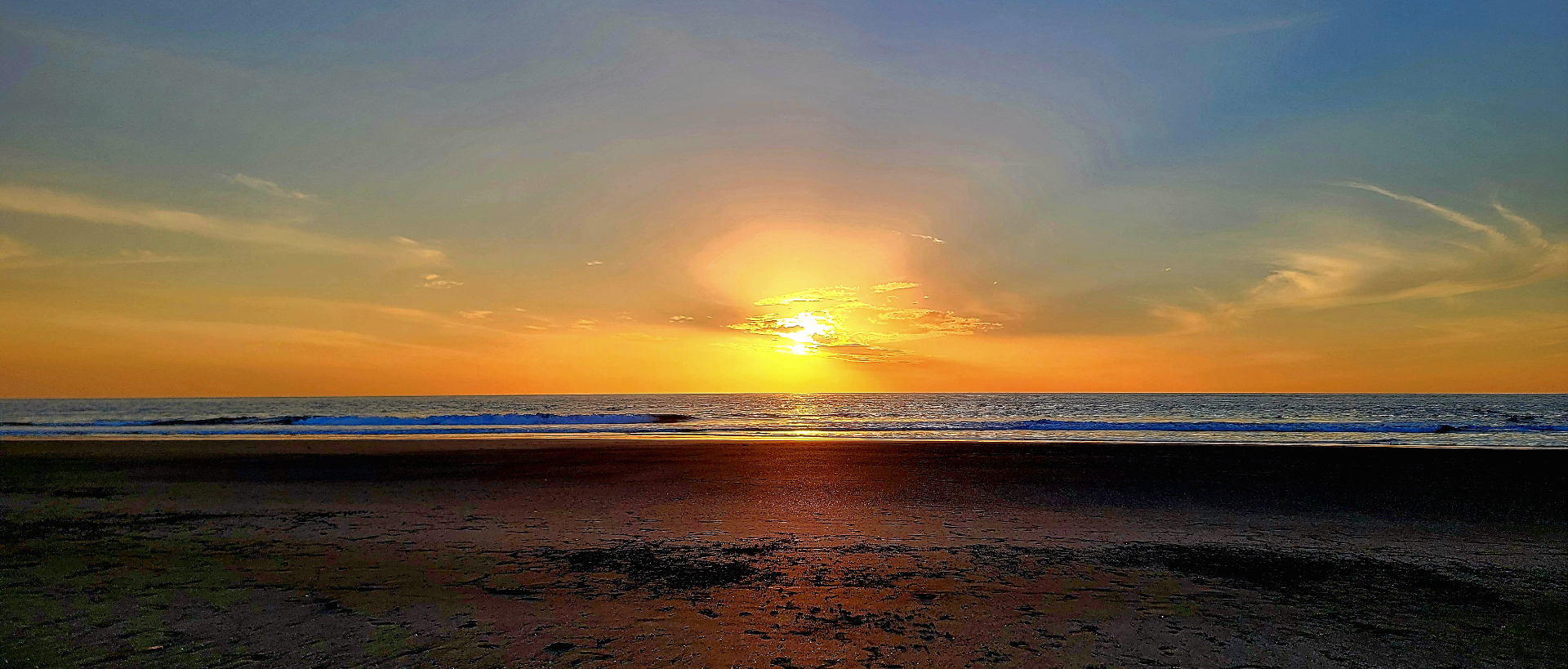
Sunset is the daily main event. Because the coast faces west, Playa Marbella gets a full, unobstructed view of the sun dropping into the Pacific, one of the simplest, most reliable reasons to be on the sand by late afternoon.
Dry season (roughly December through May) is what most people picture when they think of Guanacaste: consistent sun, calm seas, and the easiest road conditions of the year. It's the highest-demand season for a reason, clear skies practically every day, and dependable beach weather from morning to night.
Green season (roughly June through November) doesn't get enough credit. The hills around Marbella turn a deep, saturated green, waterfalls and rivers run fuller, wildlife sightings increase, and the beach empties out. Rain tends to arrive in afternoon bursts rather than all-day downpours, so mornings are often just as beach-ready as they are in dry season, with the bonus of dramatically lower prices and a slower, more local pace. It also overlaps with turtle nesting season at nearby Ostional, making it a genuinely rewarding time to visit if wildlife is part of why you're coming.
Good to know
No lifeguards. Like most beaches in this part of Guanacaste, Playa Marbella is unsupervised. Swim conservatively and know your own ability.
Currents and surf. This is an open, exposed Pacific beach with real swell, not a calm swimming cove. Rip currents can occur, and the surf can be strong even on an average day. Ask locally about that day's conditions before swimming out past the break.
Standard ocean awareness applies. As with any open-water Pacific beach, there's normal marine life in the area, including sharks, so it's worth practicing standard precautions: avoid swimming at dusk or in murky water, and don't swim alone far from shore.
Shade is limited on the sand itself. The beach isn't shaded, but the palm-lined strip along the dirt road behind it is, and it's where most visitors set up for the day.
Parking is informal. There's no paved lot or attendant. Most visitors park along the dirt road under the palm trees.
Facilities are minimal. This is a small, rural beach town. The nearest supplies are the local mini super in Marbella, and a small handful of sodas (local restaurants) nearby, including the Tiki Hut right at the beach. Don't expect beach vendors, rental huts, or restrooms on the sand itself.
A bit of history and character
Marbella is a genuinely small village, more crossroads than town, tucked between Junquillal to the north and Nosara to the south along Guanacaste's coastal back road. Like much of this region, its roots are in cattle ranching and small-scale agriculture, the same rural Guanacaste tradition found throughout the province, long before surfers and slow-travel visitors started finding their way down the gravel roads.
The town's name, Marbella, comes from the Spanish mar (sea) and bella (beautiful), fitting for a place defined by its coastline. It shares its name with the famous resort city on Spain's Costa del Sol, though the two are unrelated beyond the name itself.
The beach's other name, Playa Frijolar, is the one locals tend to use, with "Marbella" functioning more as the name of the town behind it. Frijolar translates roughly to "bean field," combining frijol (bean) with the Spanish suffix -ar, commonly used to name a place after what grows or grew there.
One small, colorful detail locals do talk about: sections of Playa Frijolar are scattered with unusually colorful stones, quartz and jasper among them, giving the beach a small reputation among rockhounds and curious walkers alike.